Tightening a clamp might look like a simple gesture: you position the band around the hose, tighten it, feel the resistance build, and stop when it “feels tight enough.” But behind that almost automatic motion lies a small world of material physics, force distribution and engineering tolerances. Understanding what actually happens inside the hose — and inside the clamp itself — is the first step to choosing the right product and avoiding two of the industry’s most common and costly problems: over-tightening and under-tightening.
From rotation to compression: how clamping force is generated
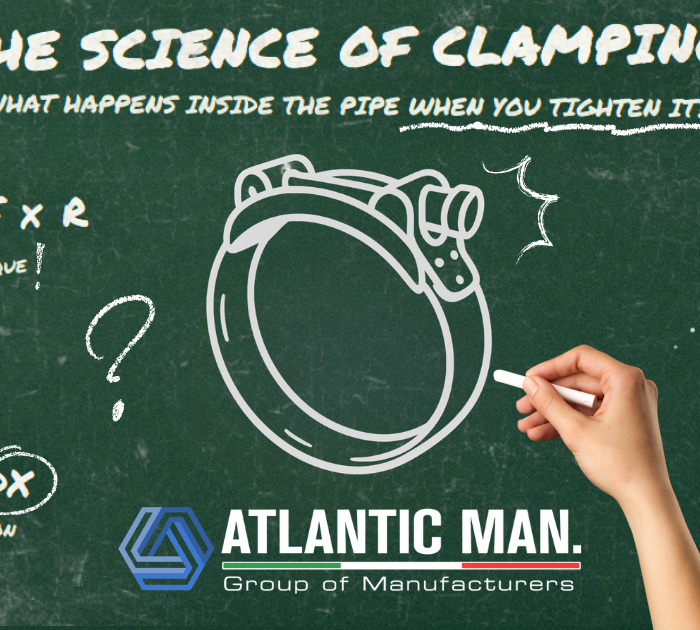
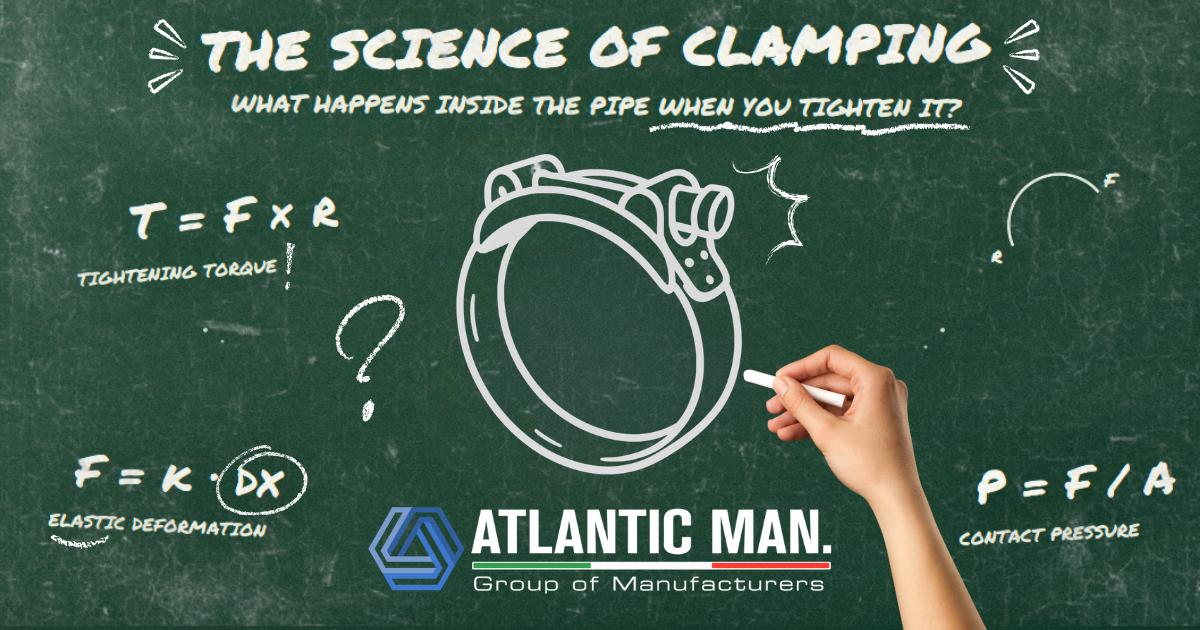
When you tighten the bolt or screw of a hose clamp, you apply a tightening torque, a rotational force measured in newton-metres. Through the thread pitch, that rotation converts into an axial force that draws the two ends of the clamp together, compressing the metal band against the hose surface.
This is where the first critical step comes in: the torque we apply by hand or with a power tool is not the same thing as the actual clamping force. Part of the energy is lost to friction — between the screw and the nut, between the screw head and the band, and between the band and the hose. This is why, for the same applied torque, clamps with different surfaces, coatings or geometries can produce different final tightness.
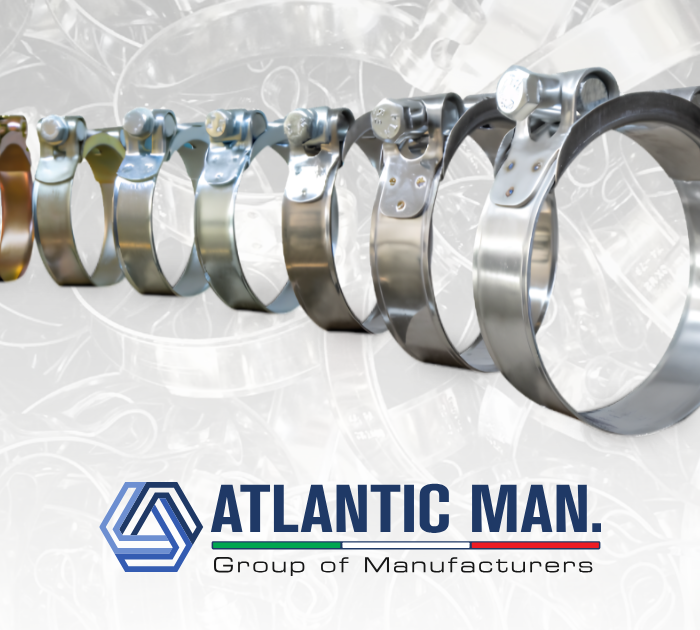
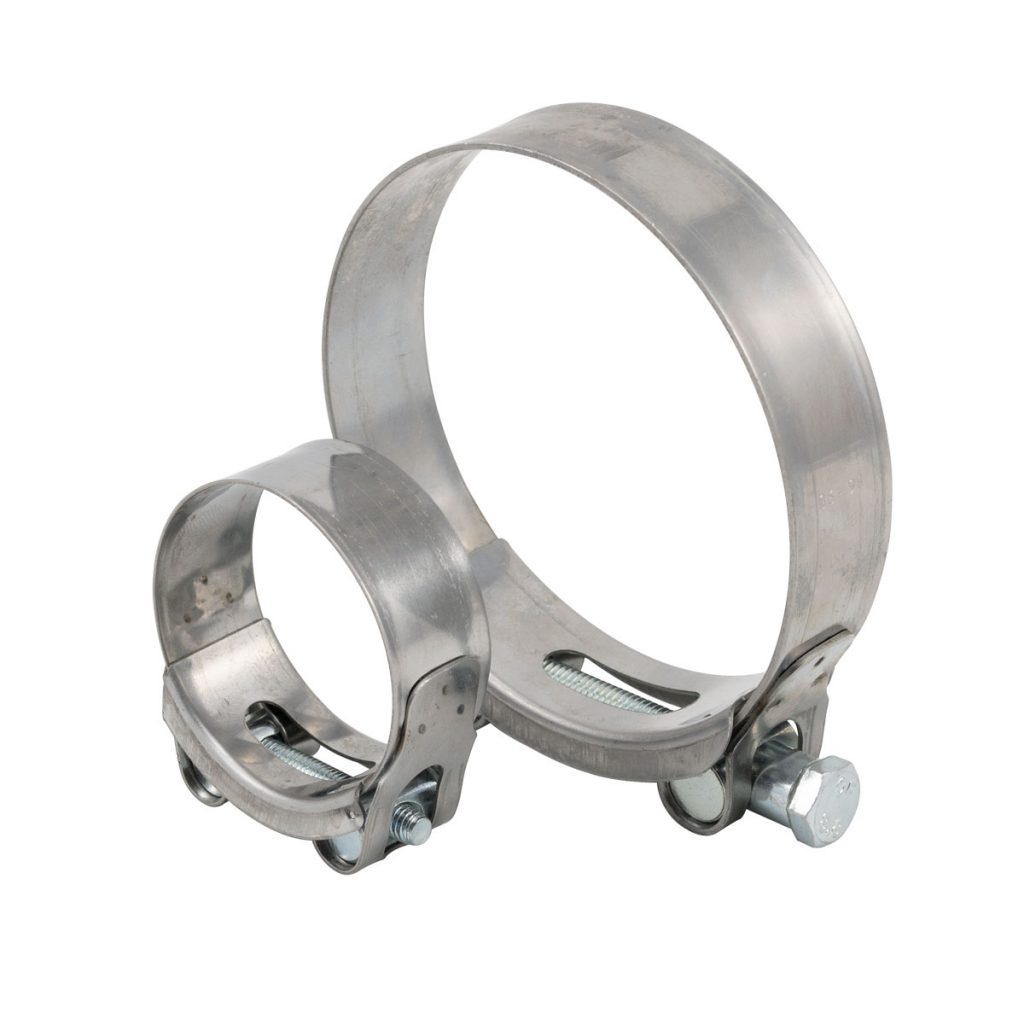
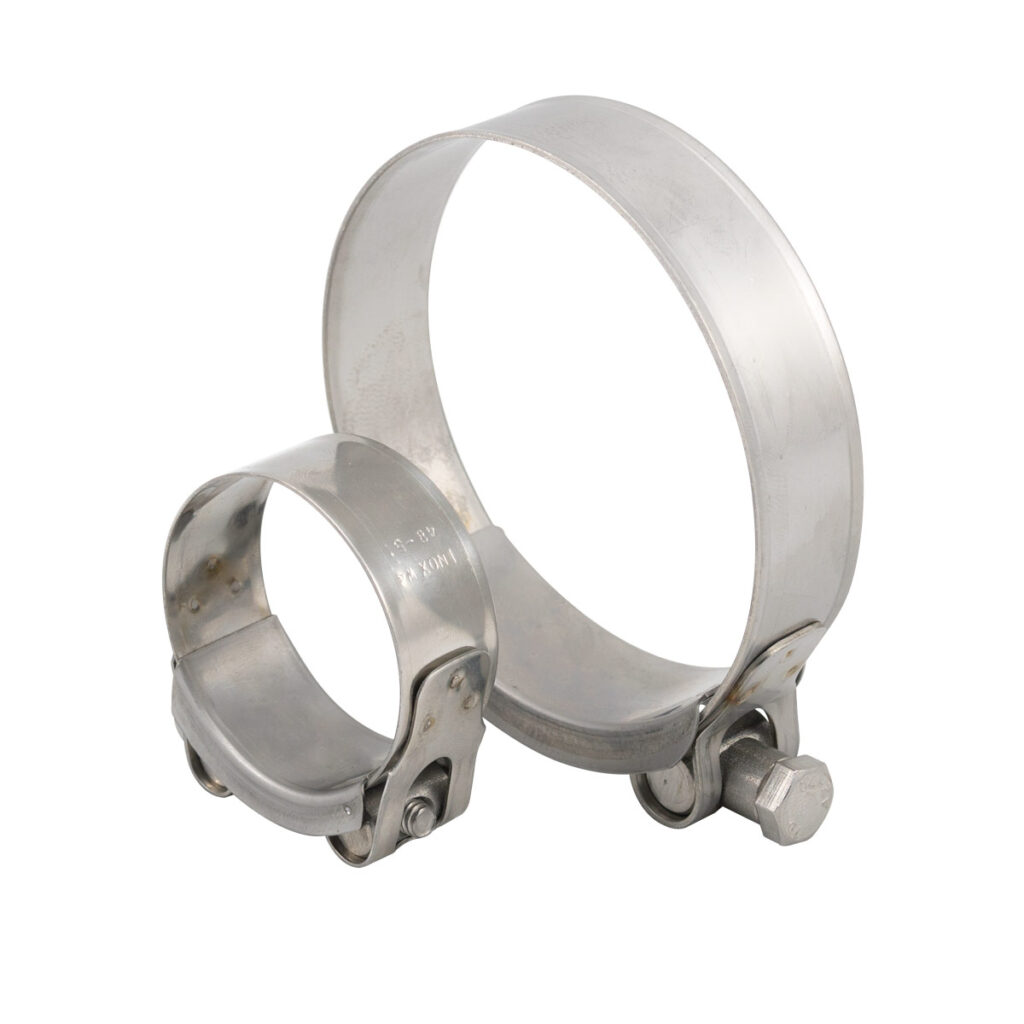
This is also why, for example, in our bolt clamps from the EURO and MAGNUM ranges, the bolt-spacer coupling allows for more consistent tightening even with electric or pneumatic screwdrivers: it reduces the friction variables that would otherwise make the result less predictable.
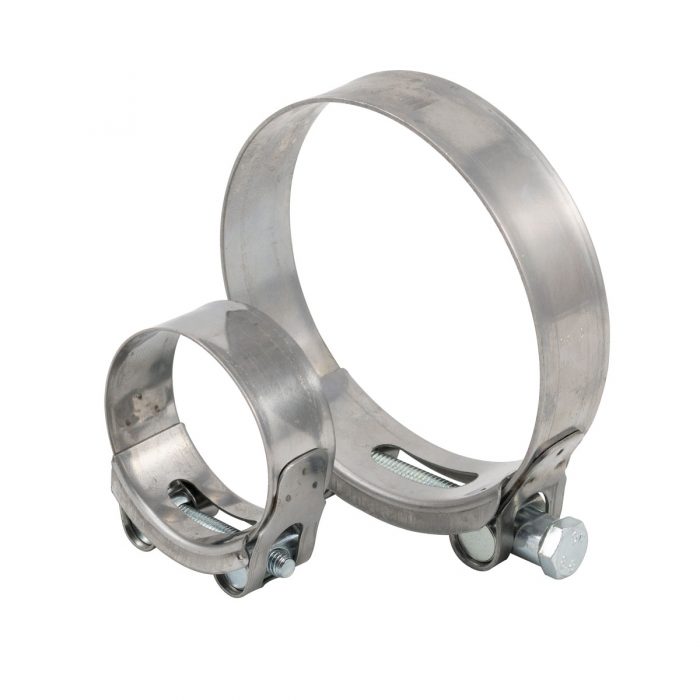


What actually happens inside the hose
The hose — whether rubber, PVC or another polymer material — is not a rigid body: it is elastic, and reacts to compression in two stages.
- Elastic deformation. In the first stage, the hose wall compresses reversibly: if the clamp were loosened, the hose would return to its original shape. This is the correct working zone, where the clamp creates a leak-tight seal without damaging the material.
- Plastic deformation (to be avoided). If tightening exceeds the hose’s elastic threshold, the wall begins to deform permanently: it thins out, loses elasticity at the contact point and, in more severe cases, is cut or torn by the clamp’s edge. This is the classic “clamp sinking into the hose” effect, which over time causes leaks even if the seal initially seemed perfect.
This is why the design of the clamp’s edge is not just an aesthetic detail: rounded edges spread the pressure over a wider area instead of concentrating it on a sharp edge, reducing the risk of damaging the hose at the point of maximum stress. This is a principle we apply across the entire Atlantic Man. range, from bolt clamps to screw clamps: hose protection is built into the design, not added afterwards.
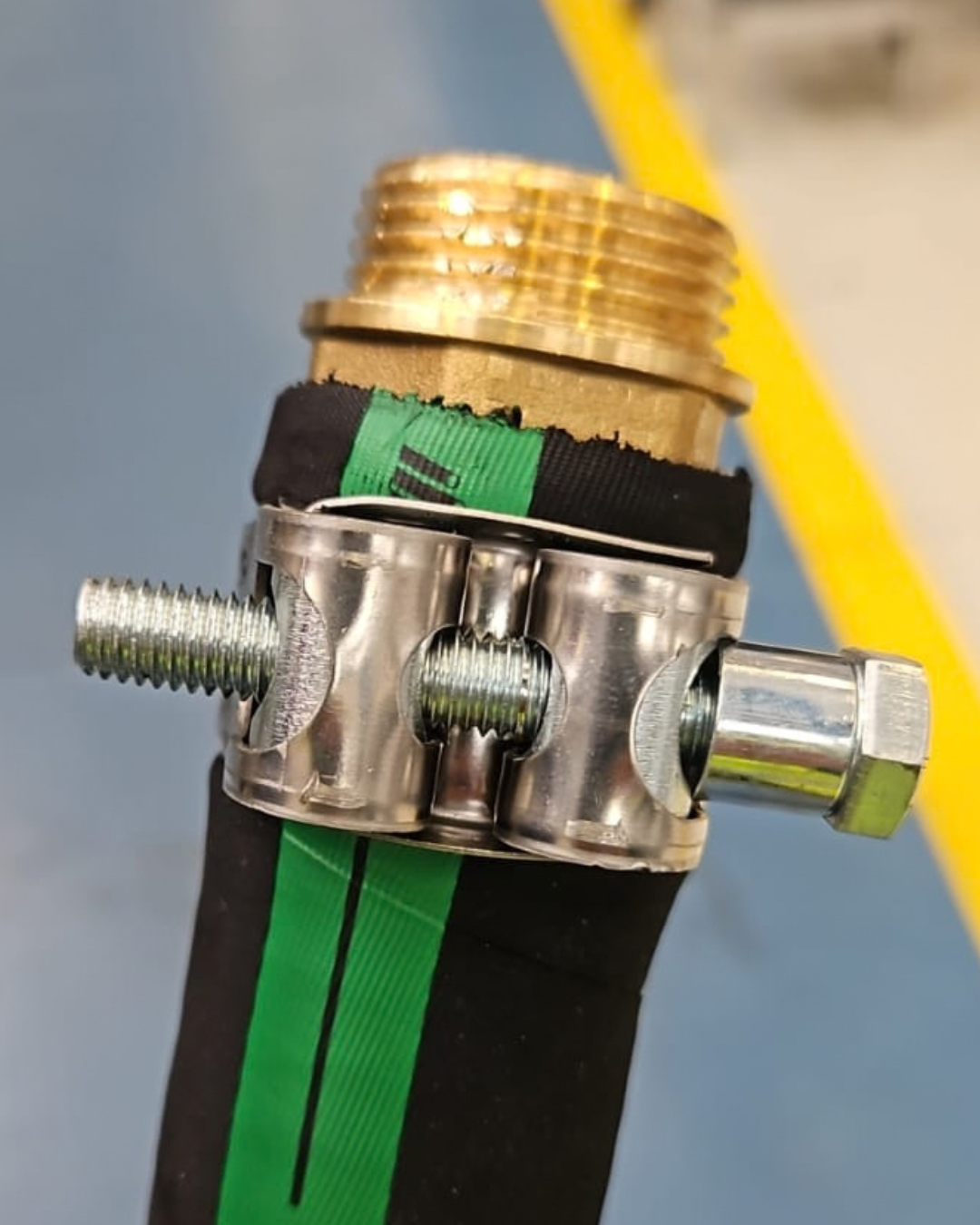
Rounded edges help avoid cutting into the rubber.
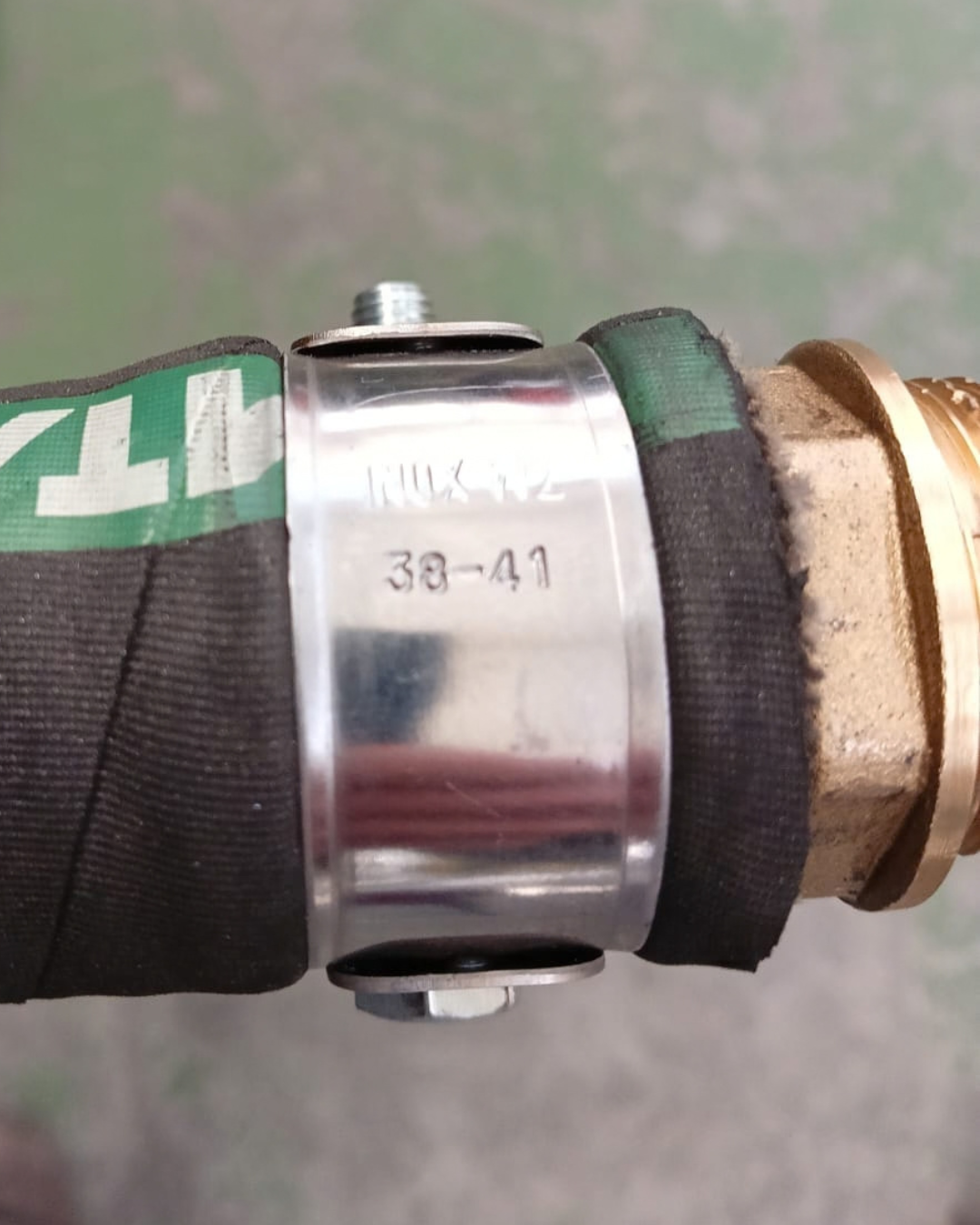
"Bottleneck" effect caused by high tightening torque.
Pressure distribution around the circumference
A second, less intuitive aspect concerns how the force is distributed around the entire circumference of the hose, not just at the point where the screw sits. A clamp well designed must transfer pressure as evenly as possible across the full 360°: if the band flexes or gives way at a specific point — think of a single fastening point subject to repeated load — the seal becomes uneven, with areas of higher pressure (risk of damaging the hose) and areas of lower pressure (risk of leaks).
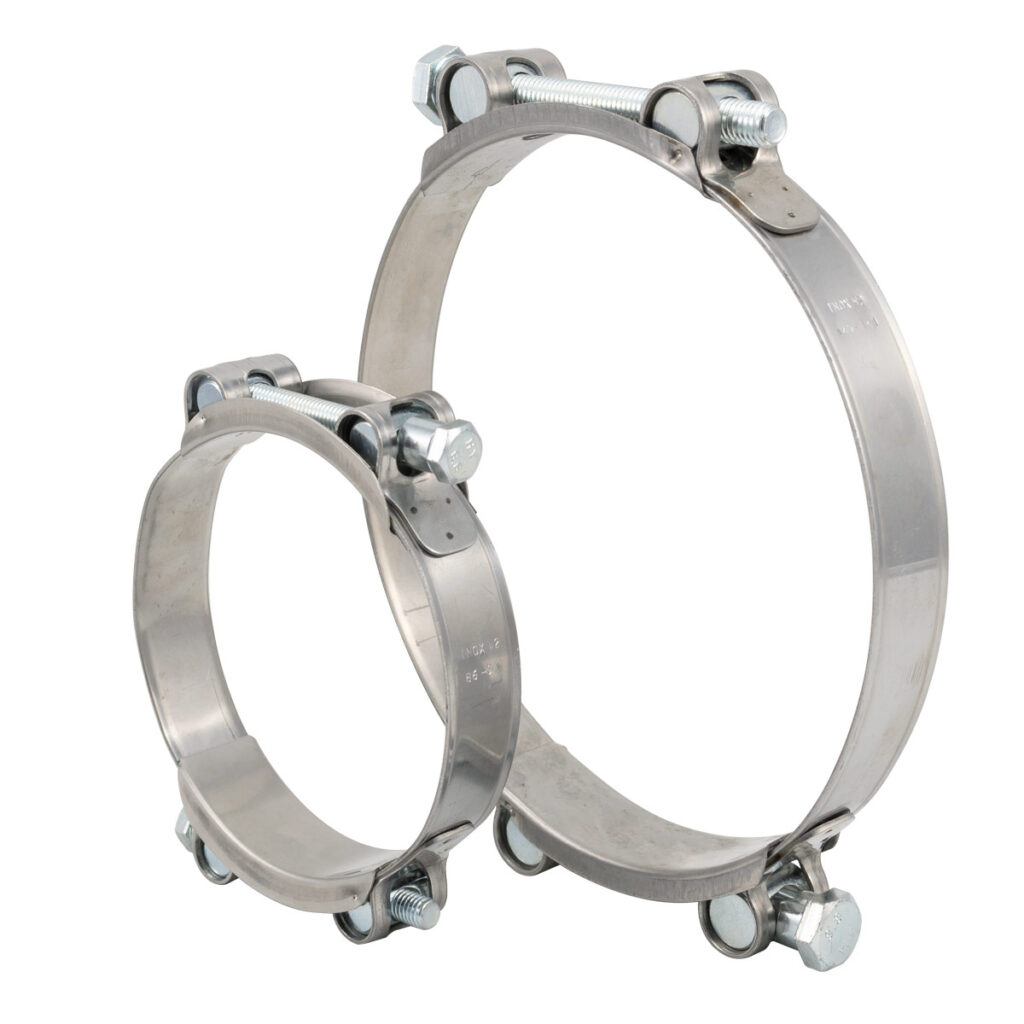
This is why solutions such as the clamp TWIN with reinforced double-fastening slot, or the three-point welding we use on continuous-band clamps, are not just about the mechanical strength of the clamp itself, but also about the consistency of the pressure transmitted to the hose over time — even under vibration, fluid pressure surges or thermal variations that cause the hose to expand and contract.
Why the hose material changes the rules of the game
The same tightening torque produces very different results depending on whether the hose is:
- rigid or semi-rigid (e.g. some PVC piping), where elastic deformation is minimal and the main risk is local fracture;
- soft and compressible (e.g. rubber or flexible irrigation hoses), where a wider contact surface is needed to avoid constrictions that reduce fluid flow;
- subject to thermal cycles or variable pressure, where the clamp needs to “follow” the hose’s micro dimensional changes without losing its seal — this is where spring solutions come in, able to compensate for expansion while maintaining more constant pressure than a purely rigid fastening.
This explains why there is no single “right” clamp in absolute terms, only the right clamp for that specific combination of hose, fluid, environment and stress.
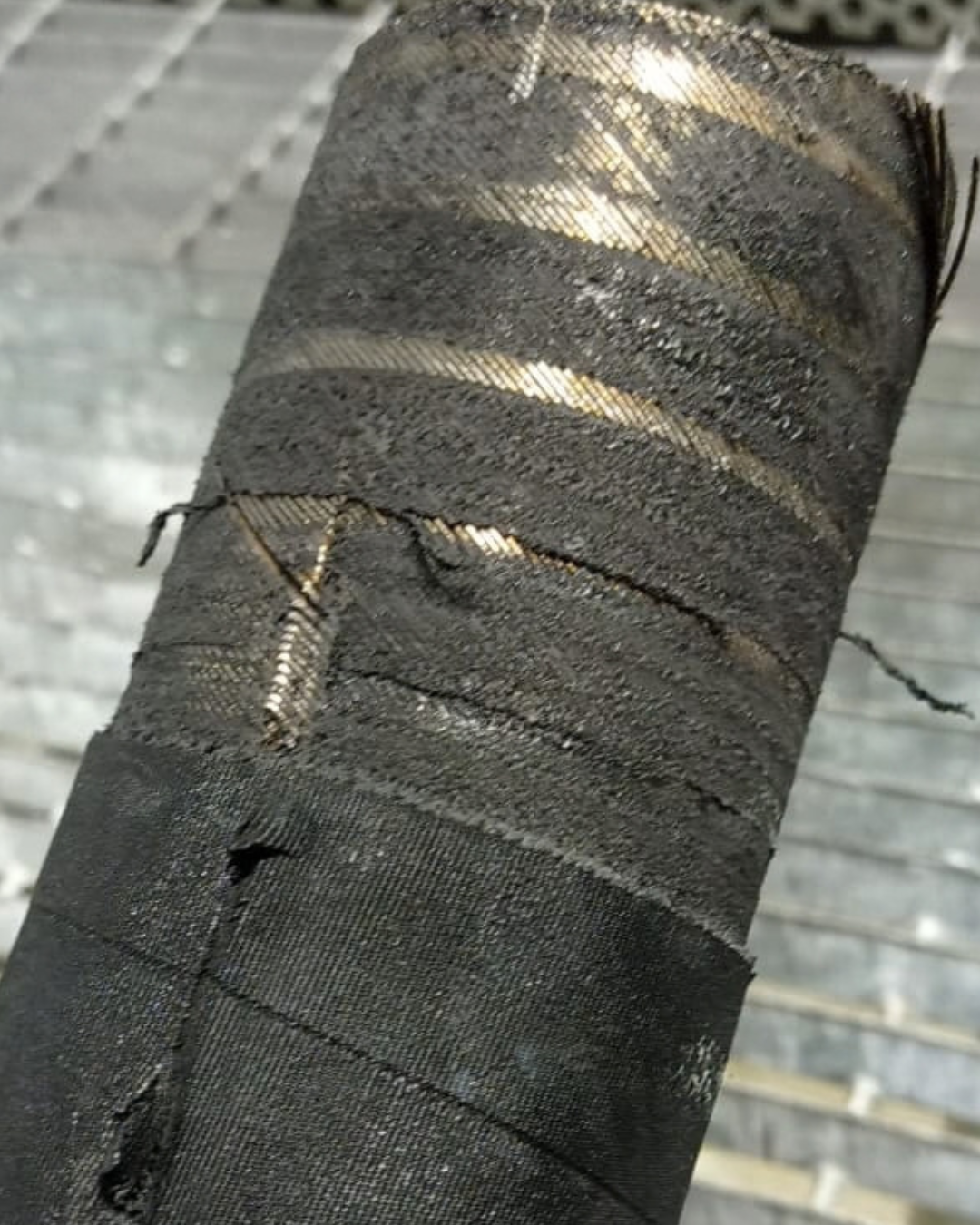
Hose damaged by over-tightening, with a tear in the wall.
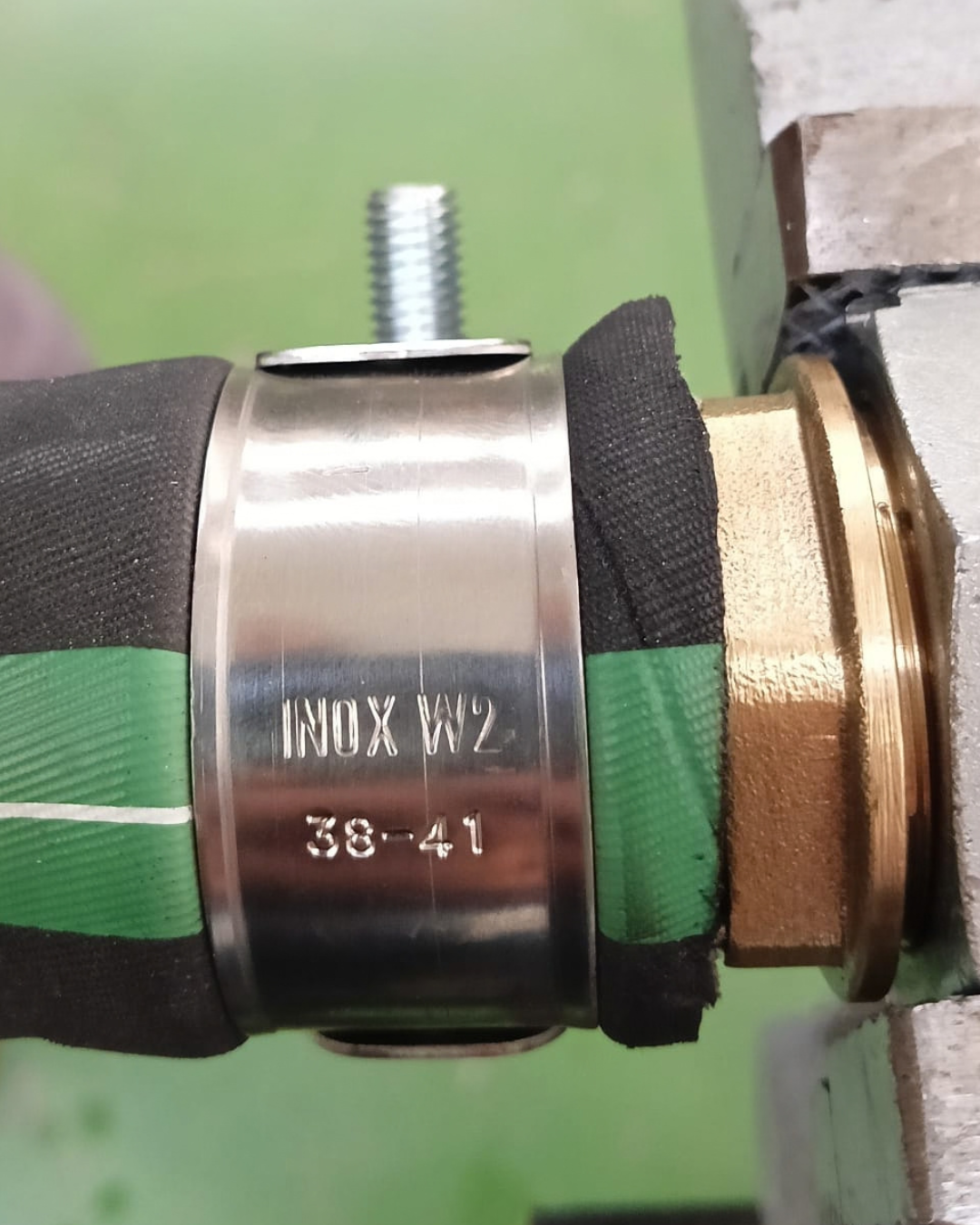
Hose constriction caused by over-tightening.
The practical lesson: tighten well, not just tightly
Translated into practical terms, this physics tells us three things:
- Tighter doesn’t mean safer. Once the hose’s elastic threshold is exceeded, every extra turn of the screw increases the risk of failure instead of reducing it.
- Clamp geometry is as much a part of the seal as the tightening torque. Edges, slots, weld points and screw-spacer couplings are engineering choices designed to make pressure more predictable and even.
- The application context drives product choice. An automotive installation subject to continuous vibration has different needs from an agricultural irrigation system or piping in the food industry — which is why a single range of bolt, screw or wire clamps is rarely enough to cover every application.
Understanding what really happens “inside the hose” when you tighten a clamp turns an empirical gesture into an informed choice — and turns an apparently minor detail into a key factor in the reliability of the whole system.
Do you have a specific application to evaluate?
Every hose, fluid and operating environment has its own variables, and the right solution is never “the usual one” but the one calibrated to the real-world case. Our team can help you identify the clamp best suited to your sector — automotive, agriculture, marine, food industry or industrial — based on the hose’s characteristics and operating conditions.